What Is IGBT Thermal Management?+
An IGBT module is a power device with advantages such as low drive voltage, high power handling capability, and high switching frequency. However, it cannot be separated from thermal characteristics. The weaknesses of power semiconductor modules are overvoltage and overheating. If this heat is not effectively managed, it may lead to equipment failure, reduced efficiency, and shortened lifespan. Only by accurately designing the thermal characteristics of the device and system can the long-term reliable operation of the device be ensured and its full potential realized—this is IGBT thermal management.
The continuous miniaturization and rapidly increasing rated power of IGBTs result in significant high heat flux, which demands sophisticated thermal management.
Technological and Commercial Trends+
For modules, IGBT heat dissipation technology primarily revolves around packaging and connection iteration. Module packaging and connection technologies consistently focus on the continuous optimization of substrates, DBC boards, soldering, bonding wires, and heat dissipation structures.
Air Cooling+
Air cooling includes natural cooling and forced air cooling.
The principle of natural cooling is: during operation, component temperatures rise, creating a temperature difference with the surrounding environment, which initiates spontaneous heat exchange between the component and its environment. This process occurs spontaneously without additional energy or power input. Natural cooling requires no auxiliary cooling equipment and relies directly on cooler ambient air, resulting in low energy consumption, high reliability, and low noise. However, this approach is limited in high-power heat dissipation scenarios.
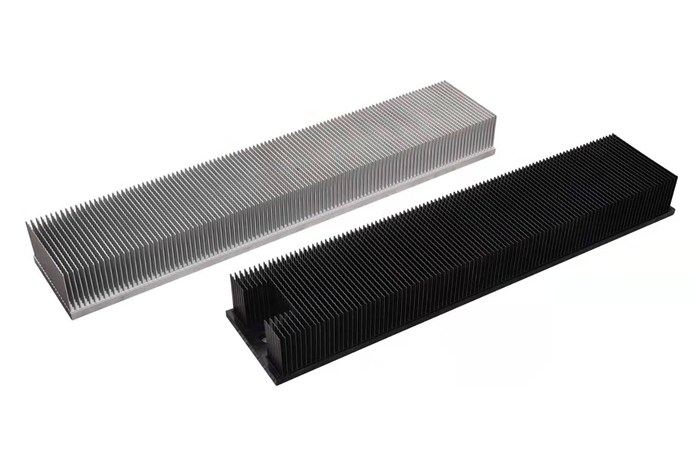
The principle of forced air cooling is: using external auxiliary equipment (such as fans) to create forced convection in the air around the heat source, thereby carrying away heat generated by components. Forced air cooling offers simple, practical equipment and low manufacturing cost, making it one of the most widely used cooling methods for wind turbine converter cooling today. However, this approach is limited in high-power heat dissipation and low-noise scenarios.
Liquid Cooling+
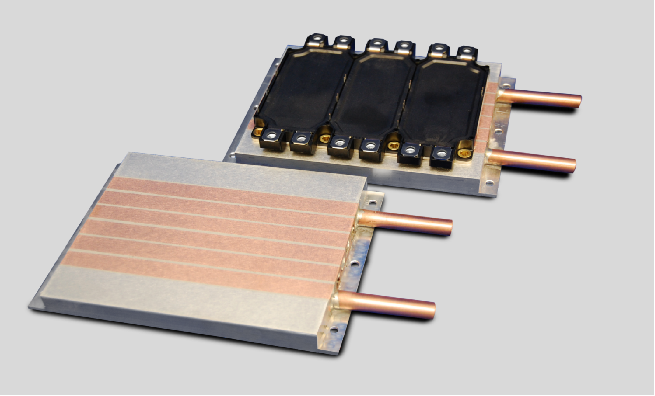
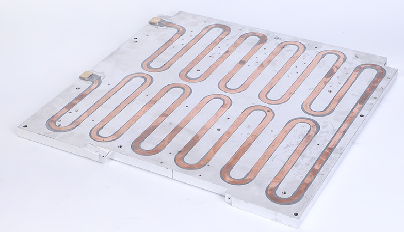
Indirect Liquid Cooling: Indirect liquid cooling refers to heat transfer between heat-generating components and coolant without direct contact, using a "cold plate" as an intermediary for indirect heat exchange. Indirect liquid cooling offers numerous advantages, including simple equipment, compact structure, convenient maintenance, no contamination to converter IGBT modules, and very low noise during operation.
Heat Pipe Cooling+
A heat pipe is a highly efficient heat-transfer component. Its operating principle is: the sealed pipe casing is filled with a working medium, which undergoes phase changes to absorb and release heat, enabling heat exchange. Heat pipes are made from high-thermal-conductivity materials and are therefore referred to as super-thermal-conductors. Compared to metal conductors with good thermal conductivity, the thermal conductivity of heat pipes is nearly a hundred times greater. The advantages of heat pipes include excellent thermal conductivity, outstanding isothermal performance, and environmental adaptability. However, they are generally suited for applications requiring long-distance heat transfer or temperature uniformity, and are difficult to meet the heat dissipation requirements of high-power wind turbine converters.
IGBT Heat Dissipation Working Principle+
Thermal Conduction and Thermal Radiation
When IGBT power devices operate, substantial heat is generated due to conduction-state losses and switching losses. The heat dissipation path from top to bottom is: chip → ceramic clad board → baseplate → heat sink. Finally, through active or passive cooling, the heat sink and air carry away heat via convection and radiation.