CNC Machining
precision006
What Is CNC Machining?
CNC machining is the process of removing solid material blocks using high-speed rotating cutting tools to produce required parts according to drawings. Cutting tools play an important role in CNC machining, directly contacting parts and removing additional material to achieve the desired parts.
- Products
- Precision Parts
- Process
- CNC Machining
- Additional Processes
- CNC Machining + Surface Treatment
- Material
- AL6061、AL5083、DC12、316L、PEEK、PPS+GF40%
- Size / Color
- Customer Customization
- Surface Treatment
- Hard anodizing, electroplating (gold plating), anodizing, sandblasting
- Quality Control
- Full inspection
- Applications
- Fuel Cell Vehicles, Oxygen/Hydrogen Intake/Exhaust Systems, Heat Dissipation System Components
- OEM
- Accept
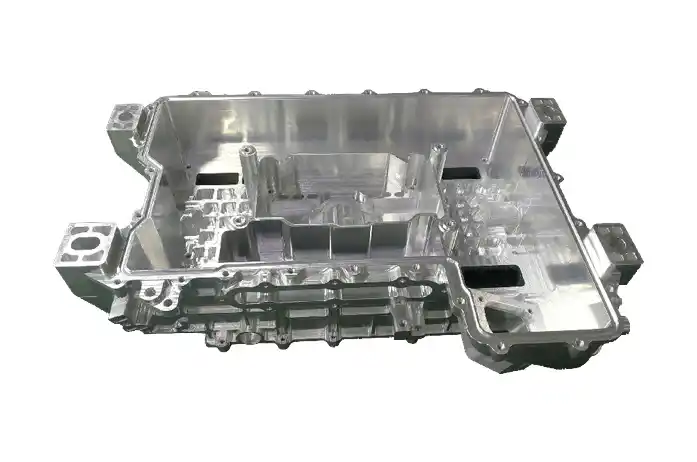
What Is CNC Machining?
CNC machining is the process of removing solid material blocks using high-speed rotating cutting tools to produce required parts according to drawings. Cutting tools play an important role in CNC machining, directly contacting parts and removing additional material to achieve the desired parts.
✓1. CNC milling
✓CNC milling is a subtractive manufacturing method that uses a cutting tool that moves and rotates to remove material. CNC milling machines can be used for cutting and machining operations on various metal materials. It is suitable for any industry that requires precision components.
✓2. CNC turning
✓CNC turning removes material by bringing the tool into contact with a rapidly rotating workpiece, and is typically used to manufacture round or tubular shapes. The CNC turning process allows the generation of complex external geometries and internal holes, including machining various threads.
✓CNC machining offers the advantages of stable quality, high precision, the ability to machine complex surfaces, and high efficiency.
✓1. Cavities and grooves: The recommended cavity depth is 4 times the cavity width. The cutting length of an end mill is limited (typically 3–4 times its diameter). Deep cavity milling—cavities with a depth greater than 6 times the tool diameter—is considered deep cavity machining; using specialized tools can achieve a tool diameter-to-cavity depth ratio of up to 30:1.
✓2. Inner edge: vertical corner radius, recommended ⅓ x cavity depth (or larger). Base plate radius recommended 0.5 mm, 1 mm, or no radius; any radius is acceptable.
✓3. Thin walls: recommended minimum wall thickness, 0.8 mm (metal), 1.5 mm (plastic); 0.5 mm (metal), 1.0 mm (plastic) are both acceptable.
CNC machined part design considerations
Economic considerations
4. Holes: Hole diameter should use standard drill sizes; any diameter greater than 1 mm is feasible. Holes are machined using drills or end mills.
5. Threads: Minimum thread size is M2; M6 or larger is recommended.
6. Tolerances: Standard ±0.1 mm; typical ±0.02 mm.
CNC machining is better suited for the following scenarios:
1. Prototype machining for design validation and engineering testing.
2. Custom machining for low-volume production of end-use parts.
Contact Us:
+8615632275585
Professional 24/7 Service for You
- Current Product
- precision006
- Product Series
- CNC Machining
- Category
- Precision Parts
Product Showcase